

Transforming Sharps Waste Management: Why Rectangular Containers are the future
Healthcare organisations today face a complex challenge on how to manage clinical waste safely, efficiently, and sustainably while keeping costs under control. Sharps disposal is a critical part of this equation. With over 3.5 million sharps injuries reported globally each year, the stakes are high, not just for compliance but for the safety of healthcare workers and patients.
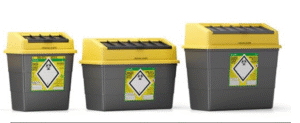
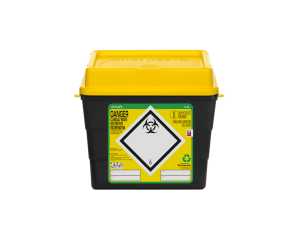
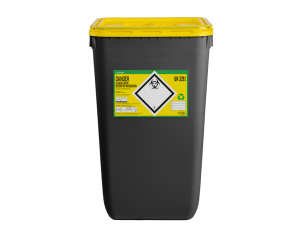
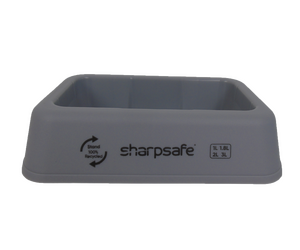
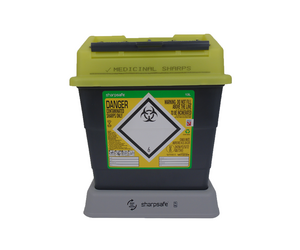
Our latest whitepaper and case study uncover a simple yet powerful solution – switching from traditional round sharps containers to rectangular Sharpsafe containers. This design innovation delivers measurable benefit across safety, cost and environmental impact.
The Problem with Round Containers:
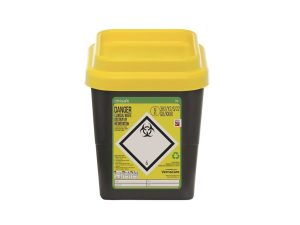
Round sharps containers have been the most common container shape for decades. While they meet regulatory requirements, their shape can create inefficiencies:
- Wasted Space: Curved walls leave voids inside the container, reducing usable capacity.
- Storage Challenges: Round containers don’t often stack neatly, taking up valuable space in clinical environments.
- Frequent Changes: Lower capacity means more container swaps, increasing labour and disposal costs.
The Rectangular Advantage
Independent testing by the Surgical Material Testing Laboratory (SMTL) demonstrates the rectangular containers outperform round ones in almost every metric:
- Up to 33.88% more capacity in mid-sized containers
- Better space utilisation for stacking and storage
- Improved alignment with walls and work surfaces for safer, more organised environments
This isn’t just theory – the numbers speak for themselves. For example:
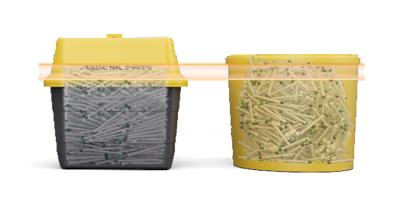
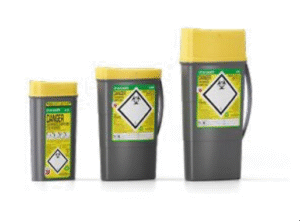
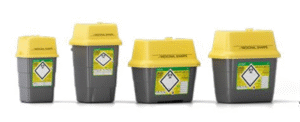
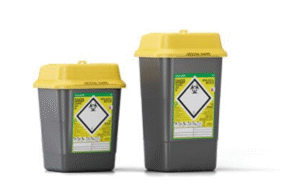
3L containers offer 15% more capacity
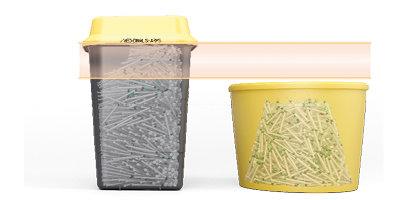
7L containers offer 34% more capacity
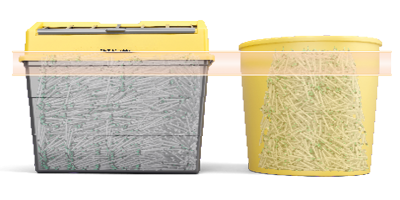
30L large containers offer 15% more capacity
Real World Impact: An NHS Trust Case Study
We worked with an NHS Trust to smoothly transition them to our rectangular Sharpsafe® containers and explore the benefits of maximising their container capacity.
Currently, the trust used around 400,000 sharps containers annually to dispose of their sharps waste, in four different sizes. By switching to our Sharpsafe® offering, they were able to reduce their usage by 11,533 containers annually. This equates to a saving of 6 tonnes of single-use plastic going to incineration, leading to:
- Cost Savings – Lower procurement, storage and transportation costs
- Operational Efficiency – Fewer container changes and associated labour
- Environmental Benefits – Reduced plastic waste and fewer transport trips, lowering the trust’s carbon footprint.
By maximising capacity, the Trust reduced container changes, freeing up more time for patient care. Fewer containers also meant fewer collection trips, cutting carbon emissions and supporting the NHS’ Net Zero commitment.
Switching to Sharpsafe® rectangular containers could cut container purchases by up to 11% every year—delivering significant cost savings and reducing environmental impact.
NHS Trust Case Study
Why Switching Matters:
The benefits of switching to rectangular containers extend far beyond operational efficiency:
- Safety First: Higher capacity reduces the risk of overfilling, a major cause of needlestick injuries
- Compliance Made Easy: Containers meet ISO 23907-1:2019 and UN3291 standards for sharps disposal
- Cost Control: Fewer containers mean lower purchasing and disposal costs.
- Sustainability: Less plastic waste and fewer transport trips contribute to greener healthcare systems
Download the Whitepaper Now to Unlock Proven Results and Actionable Insights
Our comprehensive whitepaper dives deeper into the science behind container design and capacity optimisation, plus the independent test results comparing round and rectangular containers. With real world evidence, explore the impact that rectangular containers can have on healthcare operations, costs, and sustainability.